Azmin Yusmizan
Portrait of Azmin Yusmizan

Azmin Yusmizan

Final-year electrical engineering student at INSA Lyon. I build long-range radio links, bare-metal firmware and the circuits underneath them.

A stylized LoRa frame, the modulation behind my latest project: preamble upchirps, sync downchirps, then data symbols. Channel 1 is the baseband signal, channel 2 its instantaneous frequency.
Studying
Génie Électrique, INSA Lyon
Focus
Embedded systems, LoRa and RF
Based in
Villeurbanne, Lyon
Languages
English, French, Malay

Featured project, Num'axes R&D, October 2025 to February 2026

Tracking hunting dogs where there is no network

A hunter following several dogs through dense forest needs to see where each one is, make a collar beep to find it, and keep receiving positions when a ridge cuts the radio link. Commercial products either rely on a cellular subscription or stop at two dogs with no relay.

During my R&D internship at Num'axes I designed, built and validated a prototype that does all of this over LoRa, peer to peer: no gateway, no smartphone, no network operator. I wrote the radio protocol and the firmware for both the collars and the handheld remotes.

Prototype characteristics

Radio

LoRa peer to peer, 869.4 MHz (EU868), SF7, 125 kHz, CR 4/5, 14 dBm

Group size

Up to 9 collars and 3 remotes, no infrastructure

Position frame

8 bytes, 41.2 ms on air (was 11 bytes, 51.5 ms: −19.9%)

Command frame

4 bytes, 36.1 ms on air (was 7 bytes, 41.2 ms: −12.4%)

Channel load

G ≈ 0.068 with a full group, about 87% first-try delivery (pure ALOHA model)

Hardware

Microchip WLR089U0, u-blox MAX-M10S, LIS2DW12

Firmware

C, bare-metal, event-driven; one codebase built for both roles

Estimated autonomy

Collar ≈ 117 h, remote ≈ 27 h on 2000 mAh (prototype, sleep modes not yet enabled)

ridge direct link lost REQ → OFFER → GRANT → FWD 1 2 3 GNSS collars, one position every 6 s A B Remote A (owner) Remote B (helper)
When remote A loses collar 3 behind terrain, it asks the best-placed remote to relay. One helper at a time, every step bounded by a timeout, and each forwarded message carries an ID and a hop limit so nothing is transmitted twice.

A protocol sized for airtime

I started with verbose frames for debugging, then designed compact v2 frames: positions packed as signed 24-bit coordinates (10−4 degree) with a fix flag, commands tagged with a sequence number. Every command (beep, vibration, mute, volume) is acknowledged end to end; duplicates are recognized and re-acknowledged without being executed twice. Pairing only accepts requests inside a time window.

Relaying without flooding the channel

The owner's remote picks a helper from how recently it heard the dog and how close it is by GNSS. Commands go through a request, offer, grant and forward handshake, with the acknowledgement routed back to the owner. Positions are forwarded under a time-limited lease. If the best helper times out, the next candidate is tried.

Reading a competitor's radio from its SPI bus

To ground our design choices, I measured a competing tracker's channels on a spectrum analyzer, then tapped the SPI bus between its microcontroller and LoRa transceiver with a logic analyzer. Decoding the register writes against the transceiver datasheet revealed its real settings (SF8, 62.5 kHz). That analysis is why we chose SF7 at 125 kHz: shorter airtime, better suited to many nodes.

An immobility alarm that ignores breathing

GNSS drifts too much under tree cover to tell whether a pointing dog has stopped, so the collar uses an accelerometer instead. The algorithm tracks changes between samples to cancel gravity, smooths them with an IIR filter and applies hysteresis: 5 s of stillness raises the alarm, 400 ms of clear movement clears it.

Validated from the logs up

Every event is logged over UART with its radio metrics, and each scenario (pairing, commands, GNSS, relay, alarm) has a reproducible test with pass criteria. A few lines from the test campaign:

Radio configured for P2P 869.4 MHz SF7/BW125/CR4_5
RX len=8 RSSI=-104 SNR=7 | GPSv2 g=3 rid=2 dog=1 fix=1
PAIR IGNORED: window closed
DUP CMD ignored (seq=12)
RELAY: REQ → OFFER → GRANT → FWD → CMD_ACK
GPS_RELAY: REQ → GPS_RELAY: ACK OK → RELAY: GPS_FWD

What I would do next

The remote is the autonomy bottleneck at about 27 h, so the largest gain will come from duty-cycled reception rather than fewer transmissions. After that: a dedicated PCB and enclosure, adaptive GNSS reporting when the dog is still, collision backoff, and a wider field campaign in dense, hilly terrain.

  • Embedded C
  • WLR089U0
  • LoRa P2P
  • u-blox GNSS
  • NMEA
  • SPI
  • I²C
  • UART
  • Microchip Studio
  • MPLAB ICD 5
  • Logic analyzer
  • Tektronix MDO

Experience

Two internships at Num'axes, a French company that designs and sells electronic devices for dog training, containment and tracking across Europe and Asia.

Oct 2025 – Feb 2026

R&D engineering intern, embedded systems and radio

Num'axes, Olivet, France

  • Designed and validated an infrastructure-free LoRa tracking prototype for up to 9 GNSS collars and 3 handheld remotes.
  • Specified the application protocol: compact frames cutting time-on-air by up to 19.9%, end-to-end acknowledged commands with deduplication, and time-windowed pairing.
  • Built a controlled relay mechanism with message IDs, hop limits and sequential fallback to keep tracking dogs when the direct link drops.
  • Wrote layered bare-metal C firmware on the Microchip WLR089U0 (BSP, radio HAL, protocol, services, UI), integrating u-blox GNSS and an accelerometer-based immobility alarm.
  • Reverse-engineered a competitor's radio link by spectrum analysis and SPI bus sniffing; the findings set our radio parameters.
Read the full case study

Apr – Jul 2024

Electronics engineering intern

Num'axes, Olivet, France

  • Designed a custom PCB for a dog collar system, covering both the analog and digital schematics and the board layout.
  • Simulated circuits in LTspice and validated them on protoboard before committing to layout.
  • Iterated through testing, component validation and debugging in an R&D team, under real product constraints such as EMC and form factor.

Projects

Academic and industrial projects from IUT Paul Sabatier, INSA Lyon and Num'axes, from analog front ends to radio and automation.

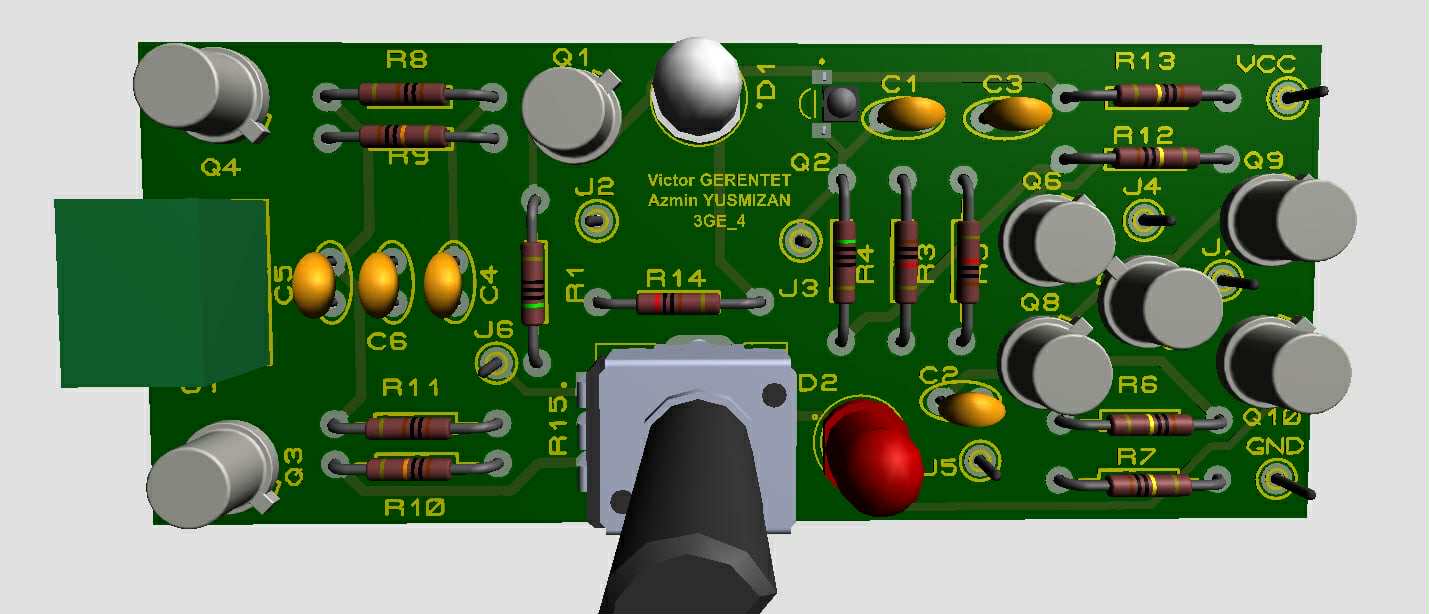
  • Analog sound level meter prototype

    INSA Lyon

    Analog sound level meter

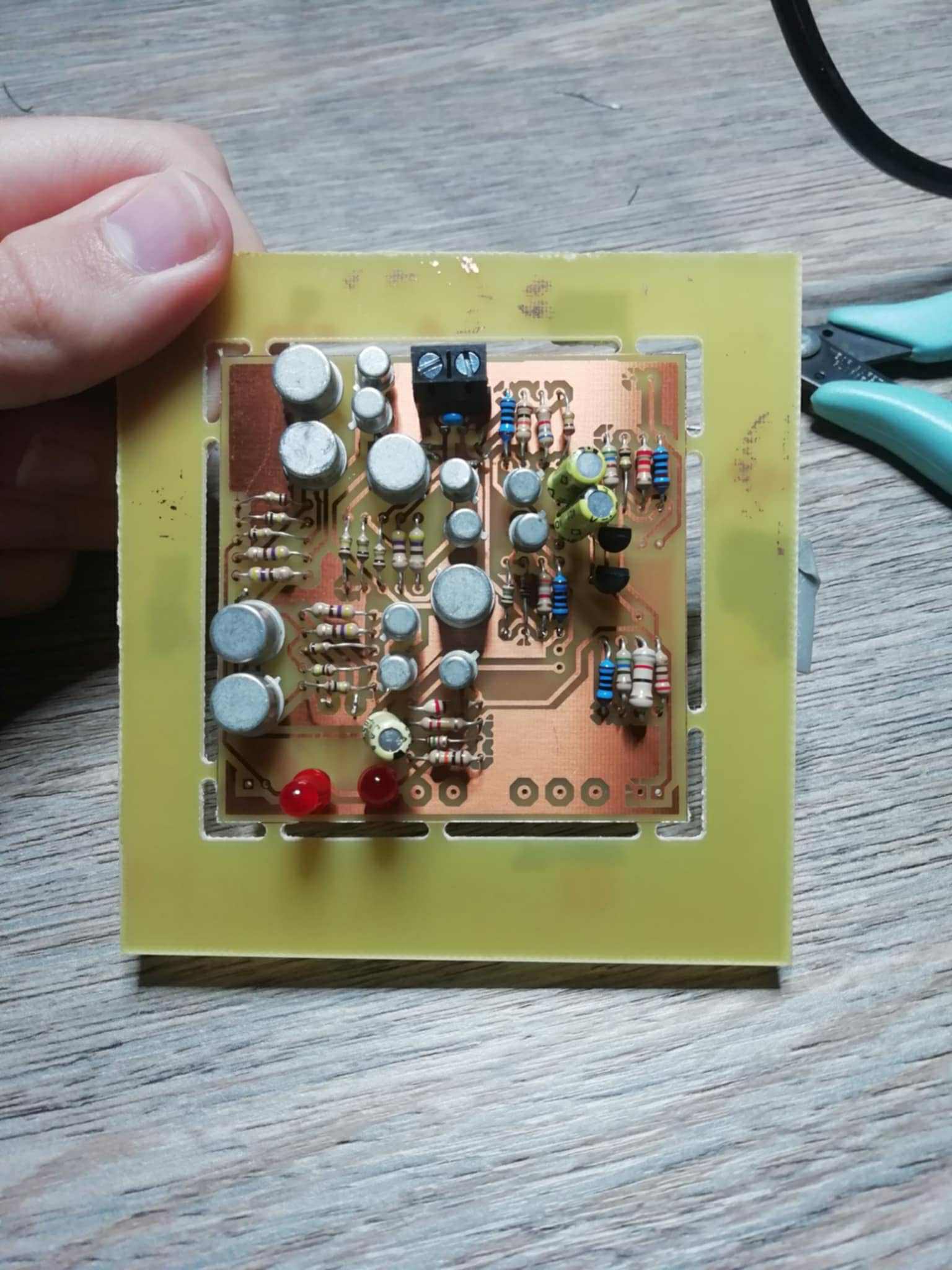
    A complete sonometer built from the ground up: circuit design, LTspice simulation, prototyping and PCB fabrication, grounded in acoustic measurement principles.

    • PCB design
    • LTspice
    • Circuit analysis
    • Prototyping
  • Environmental dust sensor

    INSA Lyon

    Environmental dust sensor

    Dust detection system with a custom circuit and embedded software, with a focus on sensor calibration for environmental monitoring.

    • Sensors
    • Embedded systems
    • Circuit design
    • Testing
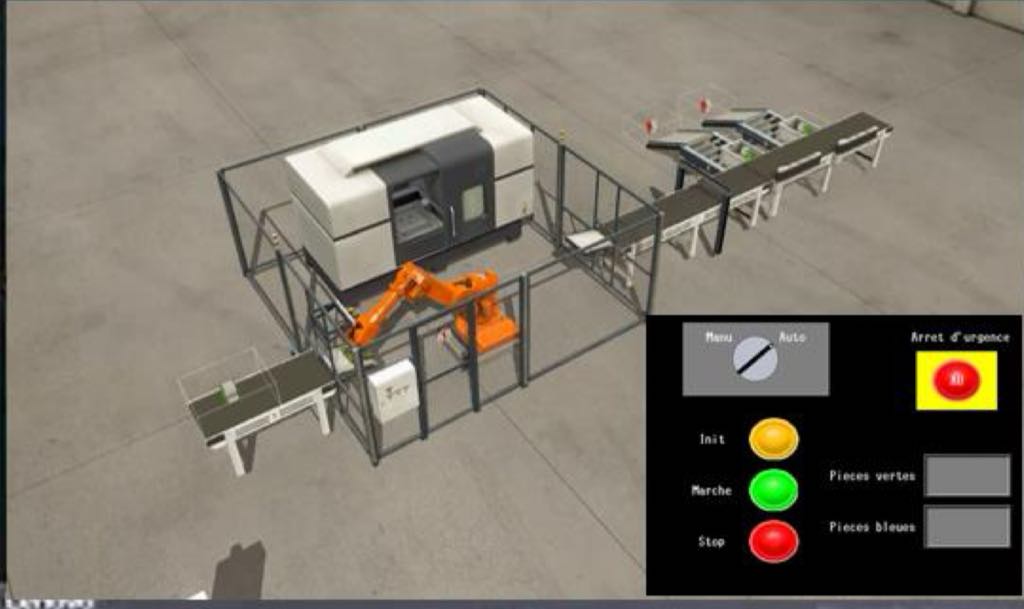
  • Simulated automated sorting line

    INSA Lyon

    Automated sorting system

    GRAFCET-based control of an industrial line that sorts parts by color and number, with a complete workflow across several control stations.

    • GRAFCET
    • Automation
    • Industrial systems
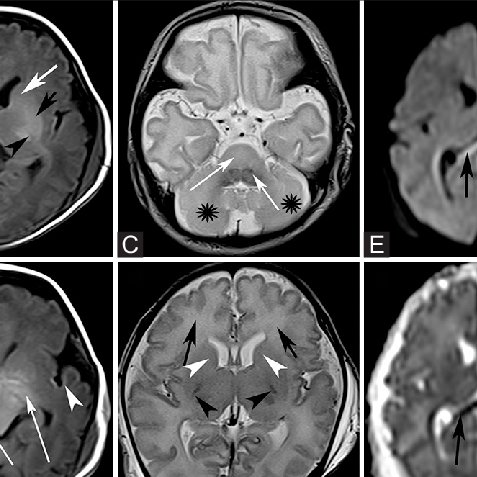
  • Brain scan images used for classification

    INSA Lyon

    Medical image classification

    Machine-learning algorithms for brain image analysis and classification, applying numerical analysis and data processing to diagnostic support.

    • Image processing
    • Data analysis
    • C++
  • REGELEC startup project

    INSA Lyon

    REGELEC smart energy startup

    Co-founded a student startup developing intelligent electrical regulation: business plan, prototype and a mobile app to optimize consumption.

    • Entrepreneurship
    • Energy
    • Mobile app
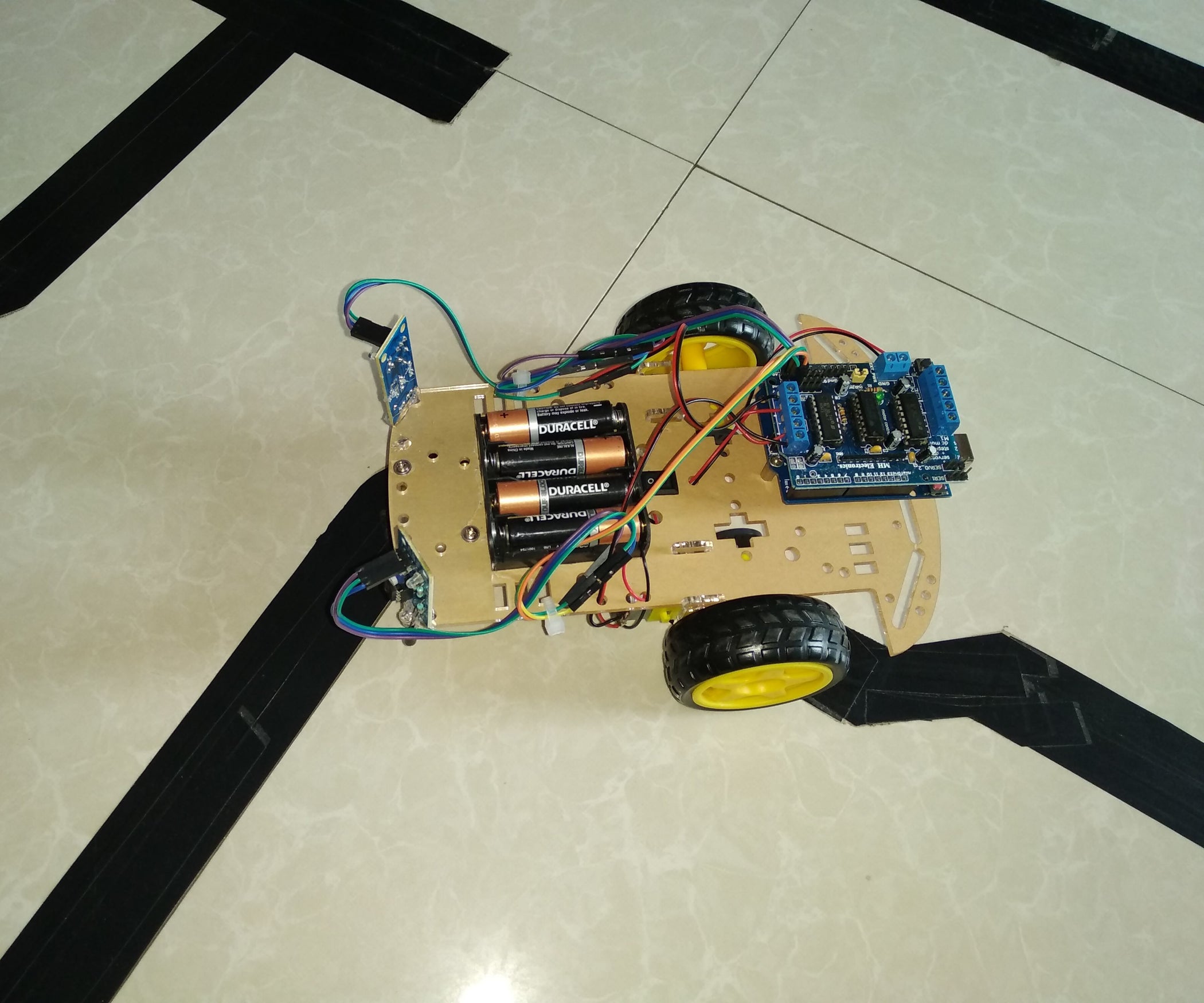
  • Line follower robot

    IUT Paul Sabatier

    Autonomous line follower robot

    A complete robot from schematic to PCB, integrating sensors, motors and path-following control.

    • Robotics
    • PCB
    • Control
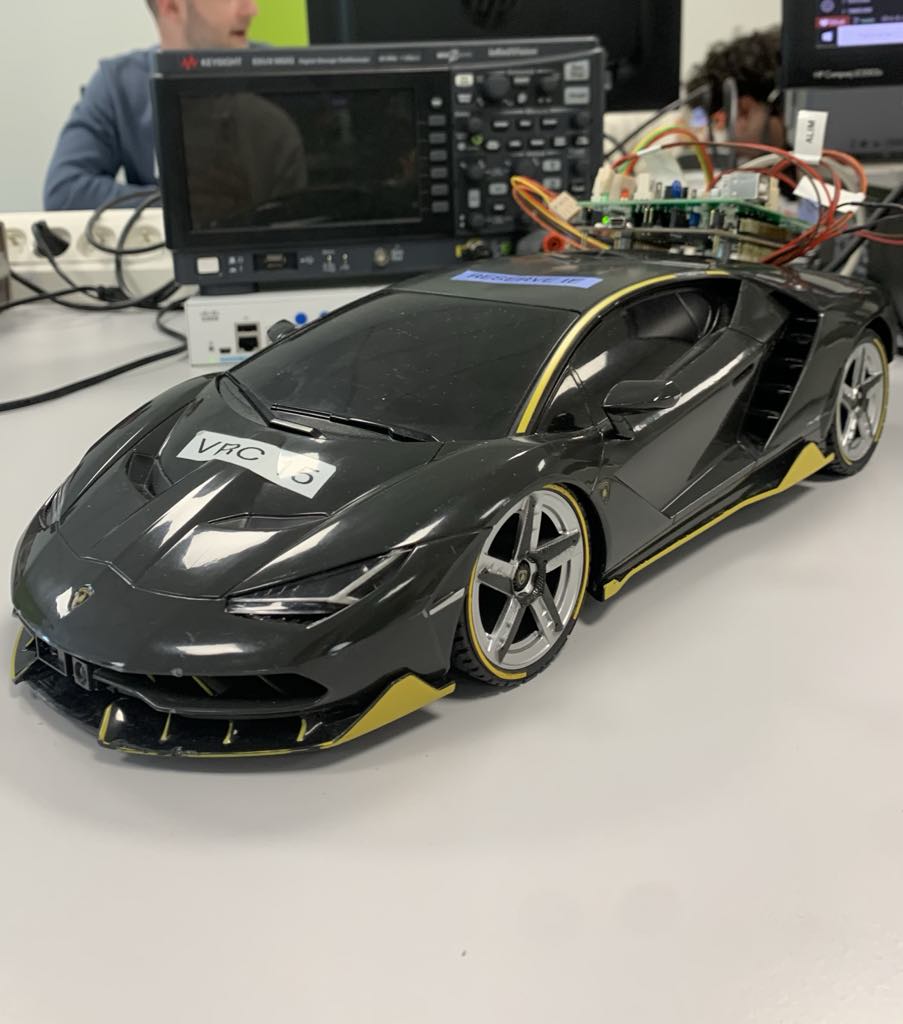
  • Multi-function smart car

    IUT Paul Sabatier

    Multi-function smart car

    Autonomous vehicle controlled from a smartphone, with multiple sensors and wireless communication.

    • IoT
    • PCB
    • Mobile control
    • Wireless
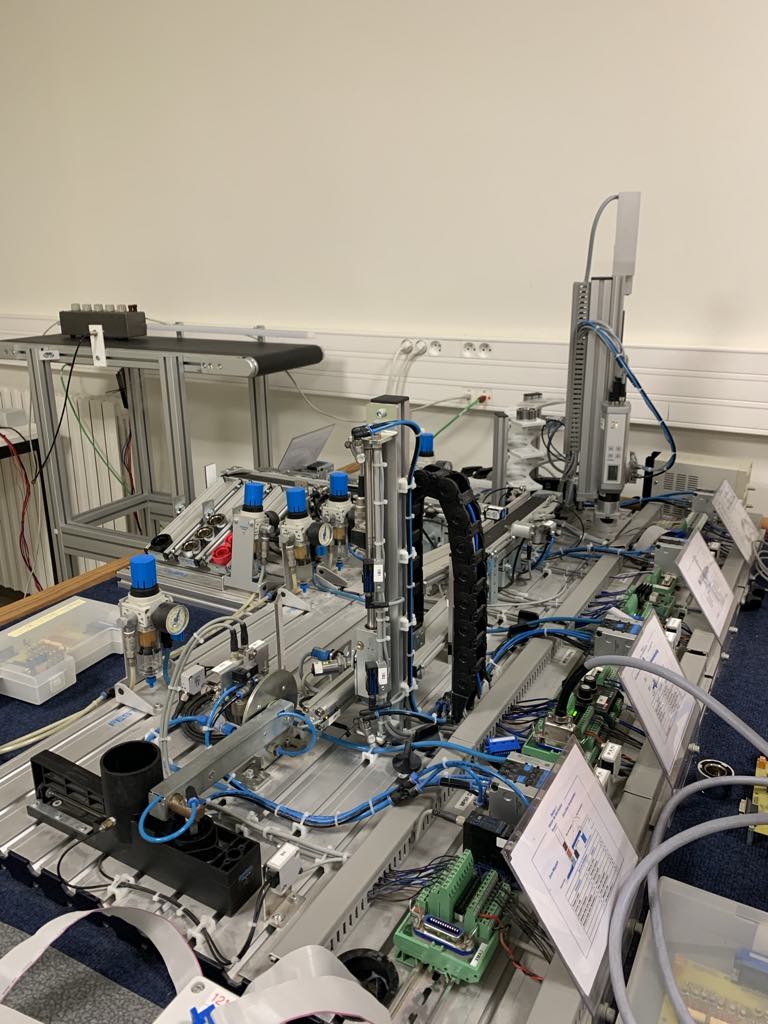
  • Pneumatic control station

    IUT Paul Sabatier

    Industrial pneumatic control

    Pneumatic handling station programmed in TIA Portal, part of a team project linking several automated stations.

    • TIA Portal
    • Pneumatics
    • Industrial control
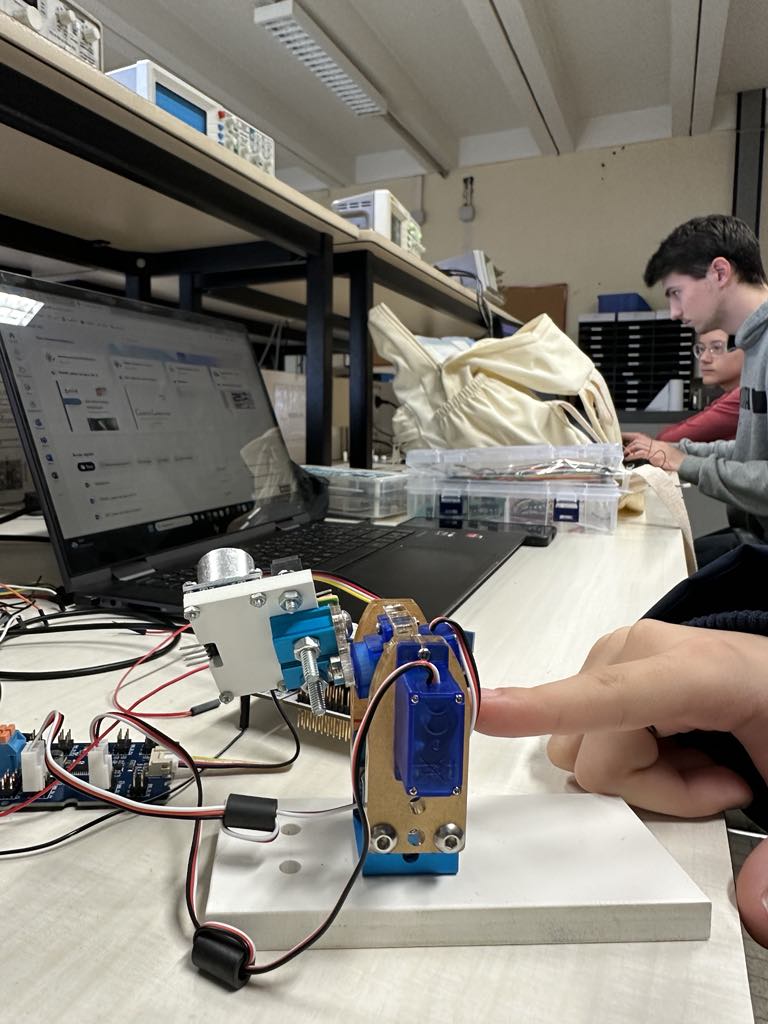
  • 3D distance scanner

    IUT Paul Sabatier

    3D distance scanner

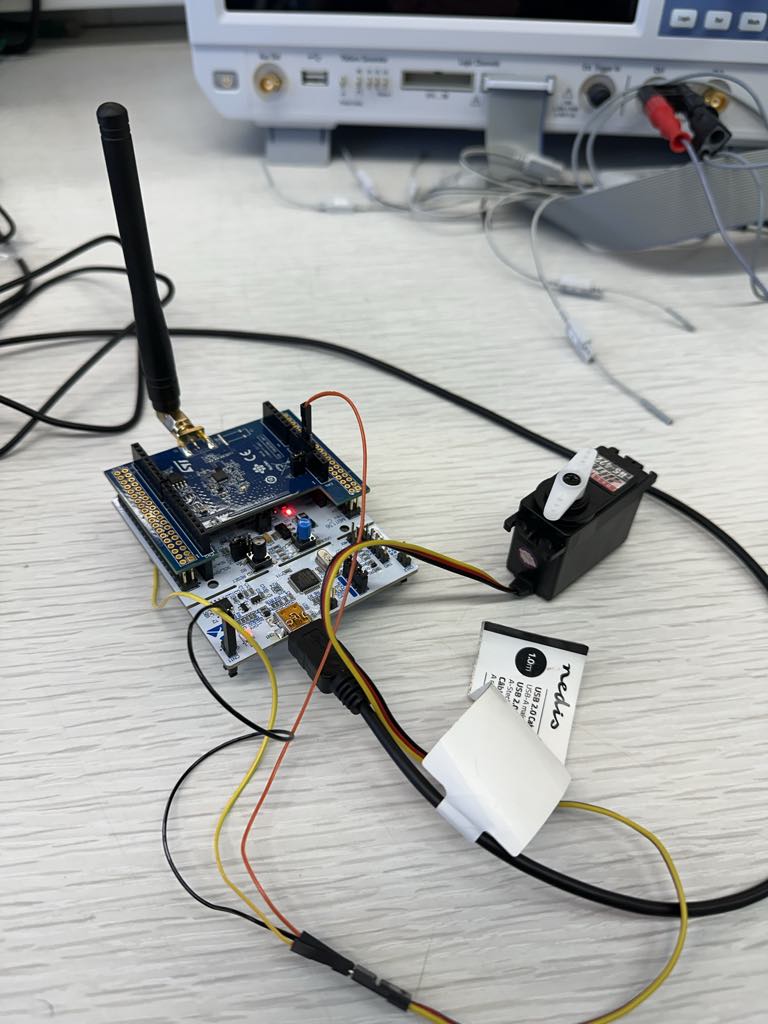
    3D scanning and data acquisition system built on an STM32 microcontroller with distance sensors and servo motors.

    • STM32
    • Servo motors
    • Distance sensors
  • Electrocardiograph signal

    IUT Paul Sabatier

    Electrocardiograph

    ECG acquisition chain with analog amplifiers, filters and signal conditioning for biomedical signals.

    • Biomedical
    • Amplifiers
    • Filters
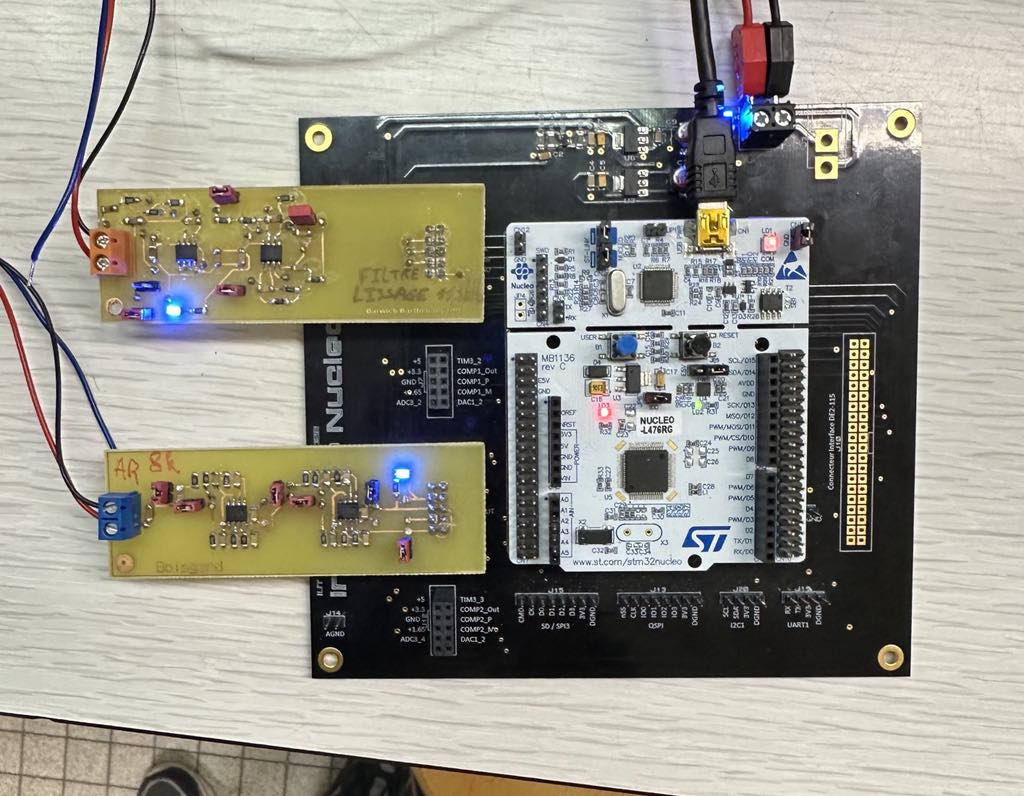
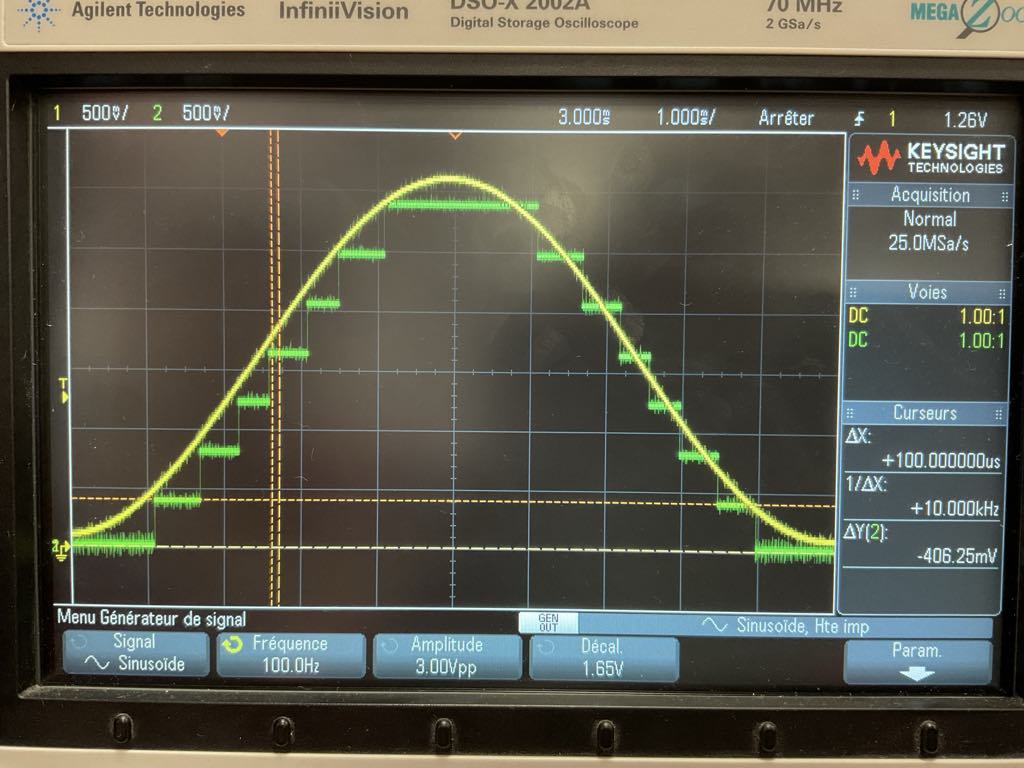
  • Analog filter board

    IUT Paul Sabatier

    Analog filter design

    Anti-aliasing and smoothing filters, designed and implemented on PCB for signal conditioning.

    • Analog filters
    • Anti-aliasing
    • PCB design
  • Digital guitar effects setup

    IUT Paul Sabatier

    Digital audio effects

    Real-time guitar effects written in C, including reverb and distortion.

    • C
    • DSP
    • Real-time audio
  • RF liquid detection sensor

    IUT Paul Sabatier

    RF liquid detection sensor

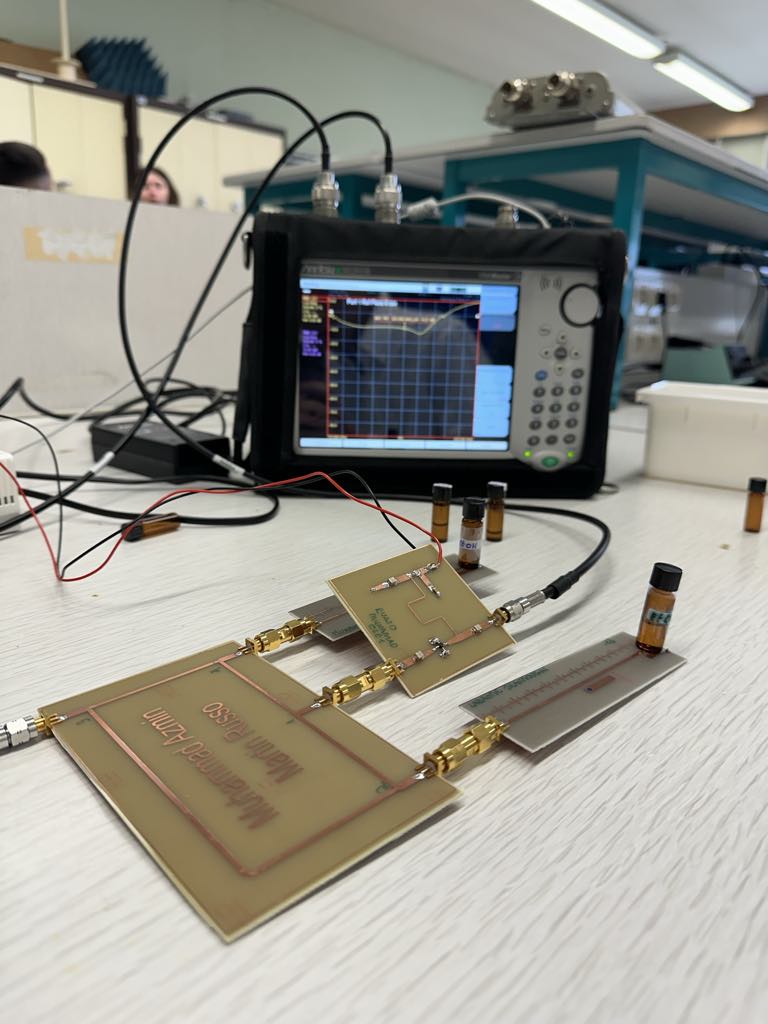
    RF sensor that tells water from ethanol, designed in Cadence AWR with Smith chart analysis and a custom PCB with precise copper traces.

    • RF design
    • Cadence AWR
    • Smith chart
  • IoT sensor network

    IUT Paul Sabatier

    IoT sensor network

    Distributed sensor-actuator network on STM32 microcontrollers with wireless links, for environmental monitoring and control.

    • IoT
    • STM32
    • Wireless
    • Sensor networks
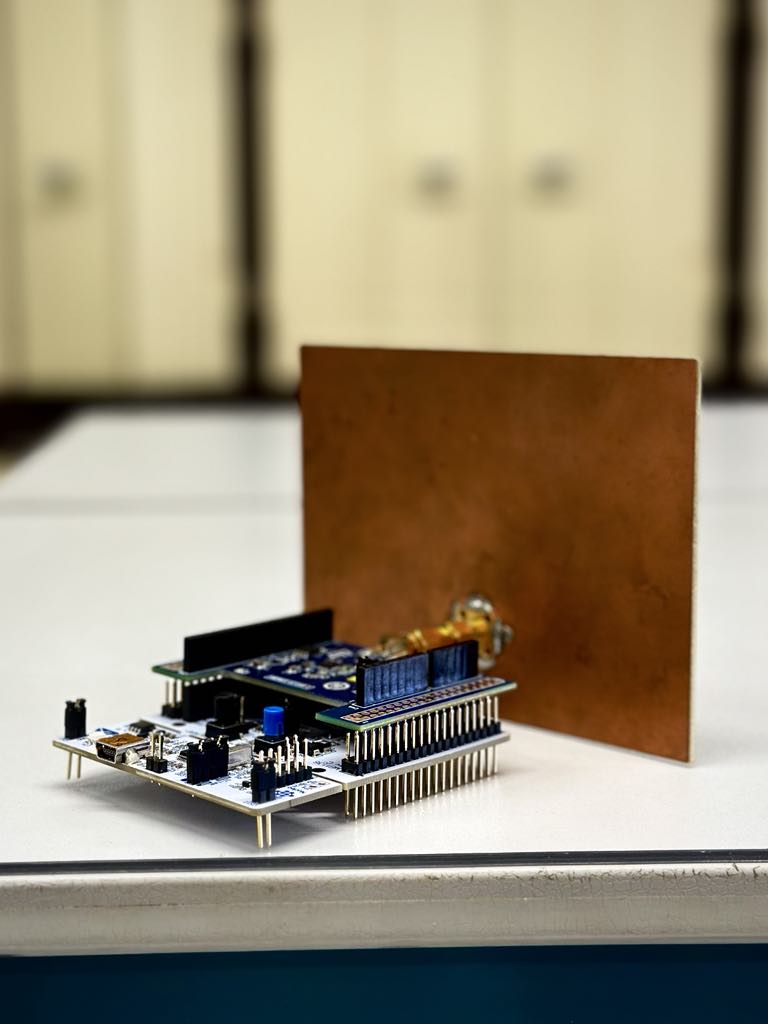
  • Patch antenna

    IUT Paul Sabatier

    Patch antenna optimization

    Reverse-engineered and optimized a patch antenna in Cadence AWR, reaching a −17 dB reflection coefficient at the target frequency.

    • Antenna design
    • Cadence AWR
    • RF optimization
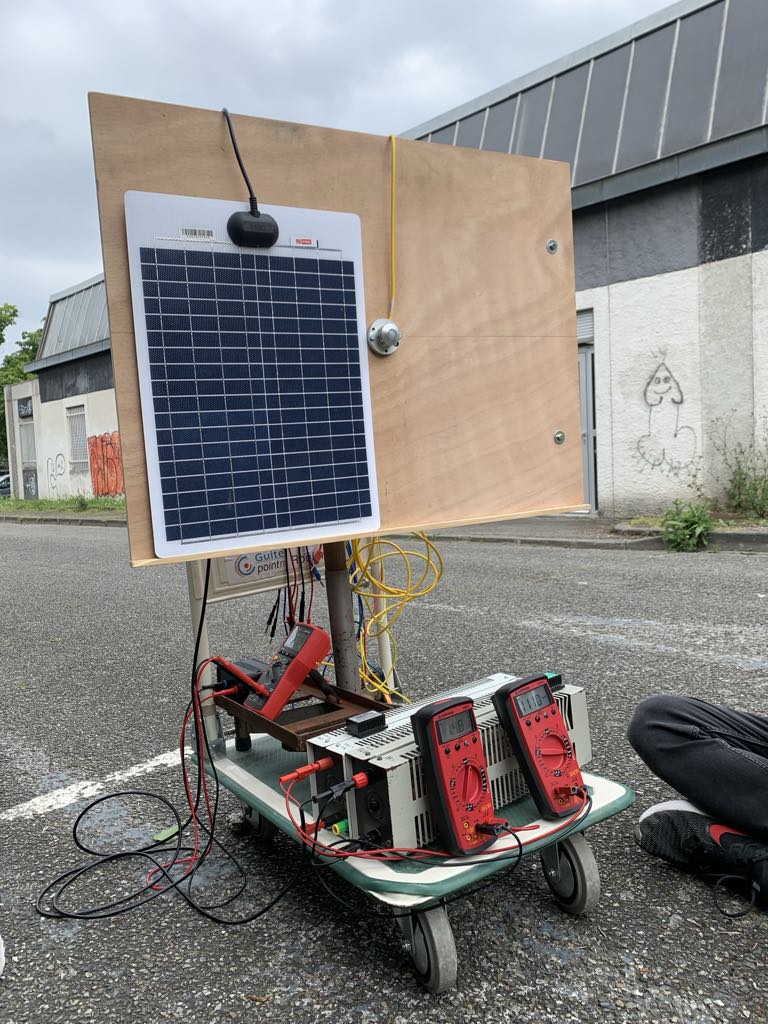
  • Solar panels

    IUT Paul Sabatier

    Solar panel analysis

    Photovoltaic modeling, simulation and experimental characterization to analyze conversion efficiency.

    • Solar energy
    • Power electronics
    • Characterization

Skills and tools

What I have used on real hardware, in internships and projects.

Radio and RF

LoRa peer-to-peer links and airtime budgeting under EU868 rules, SX127x-class transceivers, Cadence AWR, Smith chart analysis, patch antennas, spectrum measurements.

Embedded systems

Bare-metal, event-driven C; Microchip WLR089U0 and STM32; UART, SPI, I²C; NMEA GNSS parsing; Microchip Studio, MPLAB ICD 5, logic-analyzer debugging.

Electronics

Analog and digital schematics, LTspice simulation, PCB layout, analog filters and amplifier chains, protoboard prototyping, bench testing with EMC in mind.

Signal and software

Real-time DSP in C, IIR filtering, image processing in C++, protocol and state-machine design.

Automation

Siemens TIA Portal, GRAFCET, pneumatic actuation, multi-station industrial control.

Lab and method

Oscilloscopes (including mixed-domain), spectrum and logic analyzers; incremental validation, instrumented logging, reproducible test scenarios.

Education

From Malaysia to three French institutions, each step adding a new technical culture.

  1. 2024 – present

    INSA Lyon

    Diplôme d'ingénieur (Master's level) in Electrical Engineering, with a focus on embedded systems, electronics and automation.

  2. 2022 – 2024

    IUT Paul Sabatier, Université Toulouse III

    DUT/BUT in Electrical Engineering and Industrial Informatics (GEII): automation, microcontrollers and signal processing.

  3. 2021 – 2022

    IUT de Tours, Université de Tours

    French language and scientific foundation year to join the French higher education system.

  4. 2016 – 2020

    Sekolah Menengah Sains Jeli, Malaysia

    Science secondary school, with a focus on physics, mathematics and the sciences.

About me

I'm Azmin, an electrical engineering student from Malaysia. I have studied in France since 2021, first in Tours, then Toulouse, now Lyon. Working across different schools and technical cultures has made me detail-oriented and adaptable.

What I enjoy most is the step from idea to working hardware: measuring before concluding, finding out why something doesn't work, fixing it, and documenting it while it's fresh. Whether it's a radio protocol, a filter board or an antenna, I like solutions that are practical and clean.

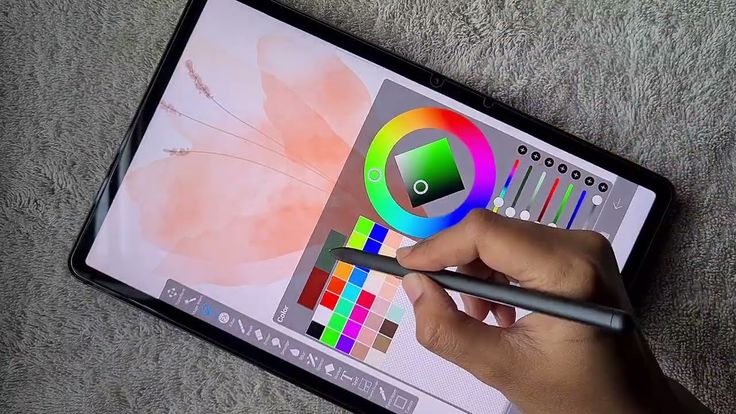
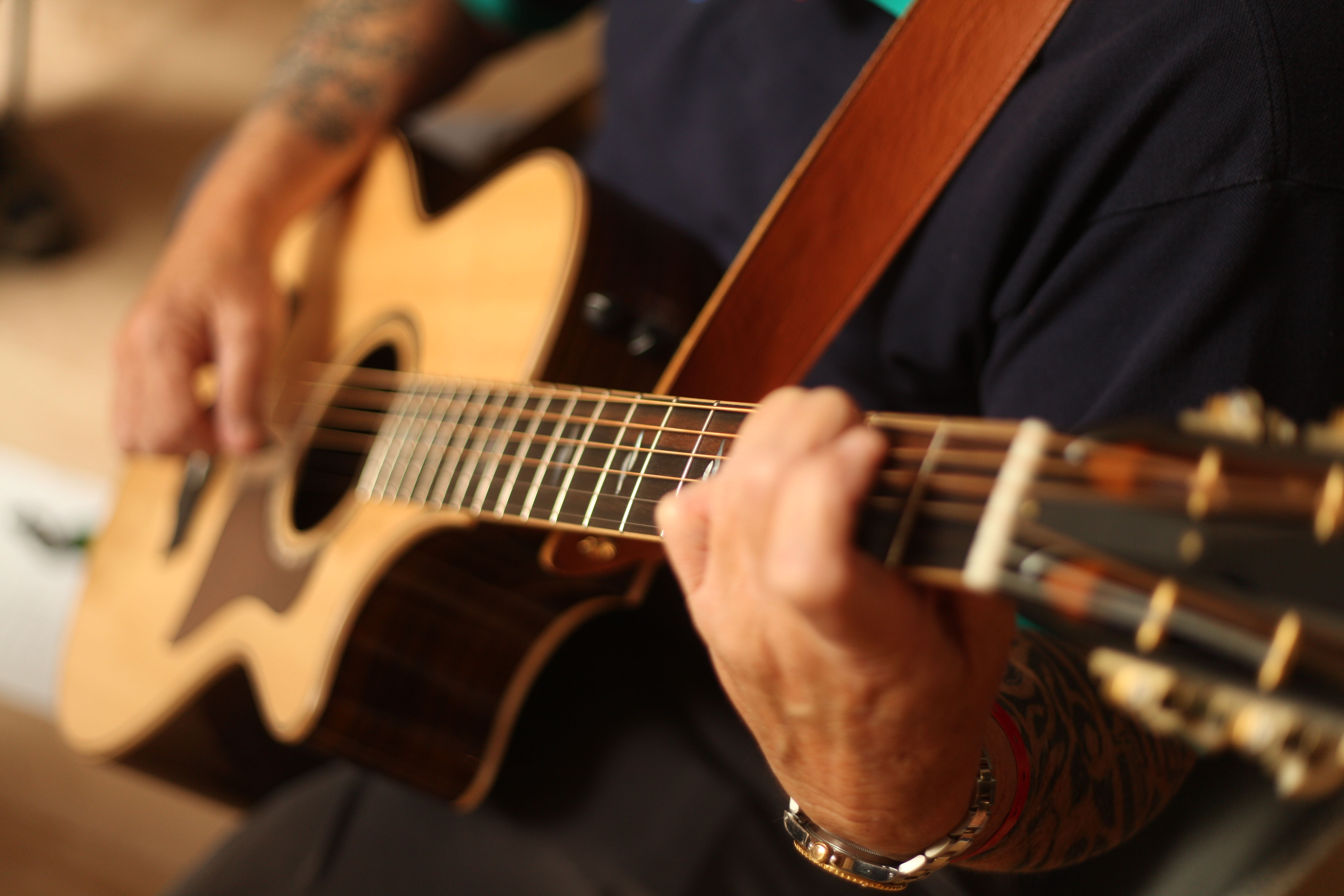
Away from the bench, reading, cooking, running, drawing, guitar and travel keep me curious and balanced.

Let's talk

A question about a project, or an opportunity in embedded systems or RF? Write to me directly or use the form.

Email
muhammad-azmin.muhamad-yusmizan@insa-lyon.fr
LinkedIn
Azmin Yusmizan
GitHub
github.com/m-azmin
Location
Villeurbanne, Lyon, France